

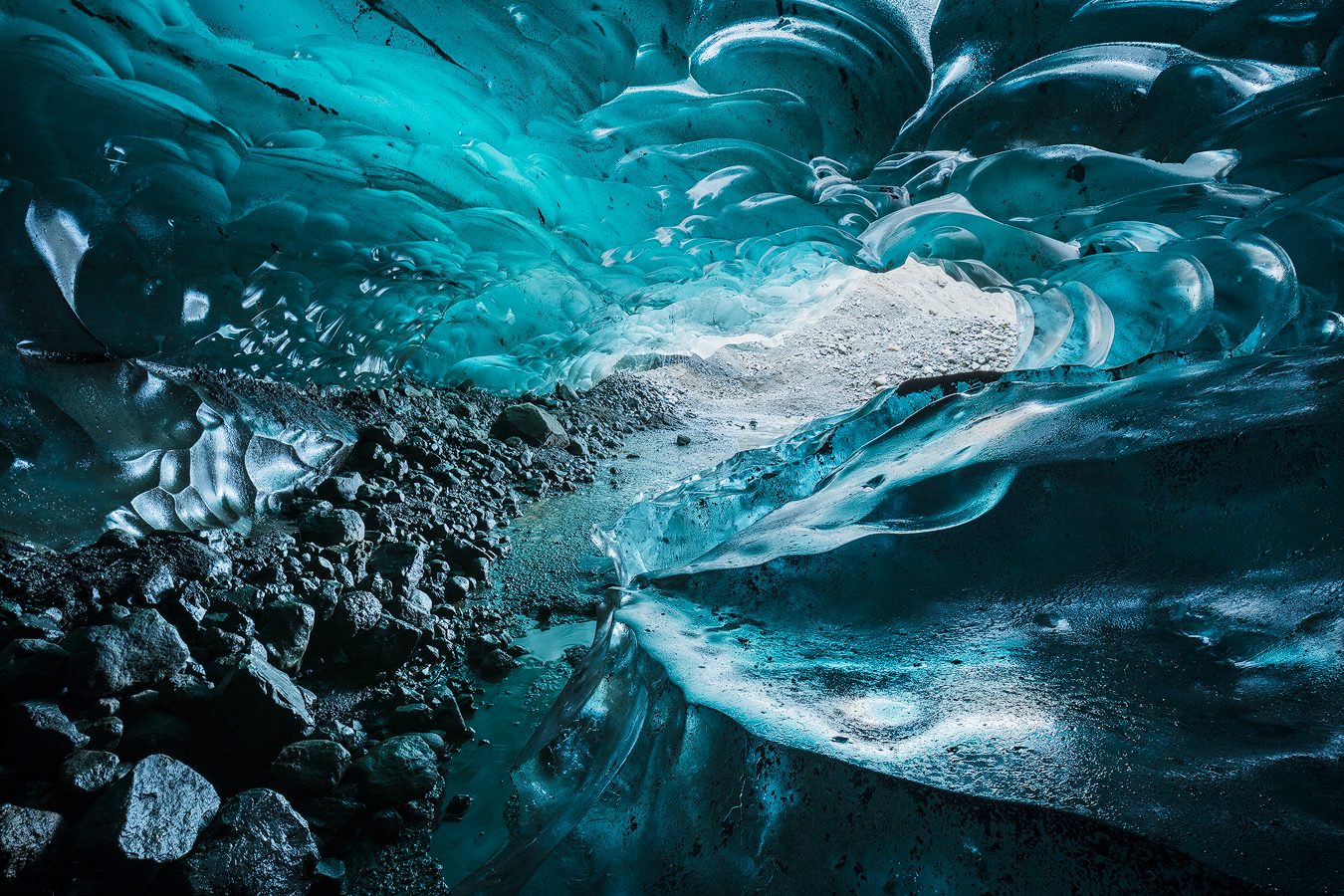
Quick answer
Natural ice caves in Iceland are typically inaccessible during summer months because warmer temperatures cause glacial melt, creating unstable conditions inside the caves. Most glacier ice cave tours operate from November through March, when freezing temperatures stabilize the structures. Summer visitors can explore man-made ice tunnels at Langjökull Glacier or join glacier hiking tours that access surface formations, but the deep blue natural caves beneath Vatnajökull and other glaciers remain closed until autumn freeze.
Iceland's glaciers cover roughly eleven percent of the country's landmass, and the ice caves that form beneath them exist in a state of constant transformation. During winter, sub-zero temperatures lock the glacier's internal structure in place, allowing guides to safely lead groups through chambers where compacted ice glows sapphire under headlamp beams. By late May, that stability breaks down. Meltwater carves new channels through the ice, ceilings thin, and cave entrances can collapse or flood within days. Tour operators suspend access not as a precaution but as a necessity—the caves themselves cease to exist in their winter form. Summer in Iceland means midnight sun and accessible highland roads, but it also means glacial rivers run at full volume. Vatnajökull, Europe's largest ice cap, sheds meltwater from June through August, and the ice caves that draw thousands of visitors each winter become submerged or structurally compromised. Can you see ice caves in Iceland in summer? The natural formations are off-limits, but the country offers engineered alternatives. Langjökull Glacier, located in the western highlands, features a man-made ice tunnel bored into the glacier itself. This tunnel remains open year-round, offering a controlled environment where visitors walk through corridors lit by embedded LEDs, surrounded by millennia-old ice. It differs in character from a natural cave—no organic formations, no shifting blue light—but it provides direct contact with glacial ice when natural access is unavailable. Glacier hiking tours operate throughout summer and reach ice formations that remain stable above ground. Sólheimajökull and Svínafellsjökull, both outlet glaciers of Vatnajökull, host guided treks across crevassed terrain where surface moulins and ice ridges reveal the glacier's internal layers. These hikes require crampons and ice axes, and while they do not penetrate deep into the ice, they expose textures and colors hidden beneath winter snow. The experience shifts from enclosed wonder to open-air geology, trading the cave's acoustic stillness for wind and the crunch of boots on compacted ice. Natural ice cave tours resume in mid-October, contingent on overnight temperatures dropping below freezing for sustained periods. Guides scout new formations each season because the previous winter's caves rarely survive the summer melt intact. Tour operators based near Jökulsárlón Glacier Lagoon lead daily departures from November onward, accessing caves beneath the Breiðamerkurjökull glacier tongue. Entry is free to the glacier site itself, but access into the caves requires a guided tour due to the terrain and the need for real-time safety assessment. The best arrival window falls between 09:00 and 16:00, when daylight and stable weather align for optimal visibility and glacier conditions. If your travel dates fall between June and September and can you see ice caves in Iceland in summer remains your central question, the answer is no for natural formations, but yes for engineered tunnels and surface glacier exploration. Adjust expectations rather than itineraries—Iceland's glaciers reward flexibility, and summer offers glacier experiences that winter cannot, including extended daylight for photography and access to remote highland routes that remain snowbound until July.
“Iceland's glaciers shed meltwater from June through August, and the ice caves that draw thousands of visitors each winter become submerged or structurally compromised.”
When Can You See Ice Caves In Iceland In Summer?
Natural ice caves typically form in winter, but year-round access is possible at specific locations like the Kötlujökull Glacier. Visiting between May and September allows for unique glacier ice cave experiences when conditions remain stable.
Winter (Nov–Mar)
HighCold temperatures; 0°C to -10°C
Blue ice is most stable and accessible during these months.
Summer (May–Sept)
ModerateVariable weather; 5°C to 12°C
Access is limited to specific glacier ice caves like Kötlujökull.
Weekday mornings
LowConsistent with seasonal norms
Early arrival minimizes interaction with larger tour groups.
Verdict: The best time for a visit is weekday mornings during the shoulder months of April or October to balance favorable weather with lower crowd density.
Operating Hours For Those Who Can See Ice Caves In Iceland In Summer
The facility operates daily from 09:00 to 17:00. Arriving between 09:00 and 16:00 is recommended to ensure optimal daylight and stable weather conditions for glacier visibility.
| Monday | 09:00–17:00 | |
|---|---|---|
| Tuesday | 09:00–17:00 | |
| Wednesday | 09:00–17:00 | |
| Thursday | 09:00–17:00 | |
| Friday | 09:00–17:00 | |
| Saturday | 09:00–17:00 | |
| Sunday | 09:00–17:00 |
Admission Fees When You Can See Ice Caves In Iceland In Summer
Access to the Kötlujökull Glacier site itself is free of charge. However, entry to the ice caves requires a professional guided tour for safety reasons, which involves separate service fees.
While the glacier site has an entrance fee of 0 ISK, visitors must purchase a paid guided tour to access the ice caves safely.
How To Get There If You Can See Ice Caves In Iceland In Summer
The ice caves are located at Kötlujökull Glacier, near Vík í Mýrdal in South Iceland. Access to the glacier site requires joining a guided group for safety reasons.
Route 1 from Reykjavík to Vík í Mýrdal
Strætó Route 51 from Mjódd terminal to Vík
Preparation Checklist If You Can See Ice Caves In Iceland In Summer
Summer ice cave visits require advance booking with a certified guide and proper cold-weather gear, even in warmer months.
-
Book a guided glacier tour — Tours are mandatory for safe ice cave access and depart daily between 09:00–17:00.
-
Wear waterproof hiking boots with ankle support — Glacier terrain is uneven, slippery, and requires stable footwear for safe navigation.
-
Dress in layered, moisture-wicking clothing — Temperatures inside ice caves remain near freezing regardless of outside summer warmth.
-
Pack waterproof outer shell and gloves — Meltwater drips constantly in summer caves and glacier surfaces stay wet.
-
Bring valid photo identification — Tour operators verify booking details and require ID for liability documentation.
-
Arrive 15 minutes before departure time — Guides distribute safety equipment and conduct mandatory briefings before glacier access.
Check availability
Common questions about visiting Iceland ice caves
Everything you need to know about can you see ice caves in iceland in summer